The Importance of Names
In the opening pages of Genesis, something subtle and profound is happening beneath the surface of the creation account. God creates the heavens and the earth, the seas and the land, the light and the darkness — and then He names them. He names the stars, the sun, the moon. In ancient Near Eastern culture, to name something was to claim authority over it. To name something was to say: this belongs to my domain.
Then He creates humanity. And here, something shifts.
Rather than naming the animals Himself, God brings them to Adam and watches as Adam names them. This wasn't a trivial task to pass the time. It was an act of delegation — a deliberate transferring of authority. Humanity was given dominion over the creatures of the earth, and the naming was the proof of it. It is a detail easy to skip over, but it carries enormous weight. The things God named, He kept authority over: the skies, the seas, the turning of celestial bodies. The things He invited humanity to name, He entrusted to our care.
This is why it becomes so heartbreaking, later in scripture, when people begin naming the sun and the moon and the seas after gods of their own invention — calling the creation by personal names, building temples to it, bowing before it. They had forgotten who had named those things first. They worshipped the creation and lost sight of the Creator.
But naming doesn't only appear in creation. It reappears, again and again, in God's most intimate moments with people.
Abram becomes Abraham. Sarai becomes Sarah. Before Zechariah and Elizabeth's son is even born, God sends a messenger with his name already chosen: John. And in the New Testament, the moment Jesus meets Simon — before Simon has done a single remarkable thing — He looks at him and says, in effect: You are going to be called Peter. The Rock.
This is where it gets astonishing.
Peter hadn't earned that name. He hadn't built anything yet. He hadn't preached a sermon, walked on water, or become the foundation of the early church. He was just a fisherman standing in front of someone he had just met. But God doesn't speak to us as we are. He speaks to us as who we are becoming. He sees the finished work and calls us by it before we've even begun.
We see the same thing with Gideon. When the angel of the Lord finds him, Gideon is not standing tall on a battlefield. He is hiding in a winepress, threshing wheat in secret, terrified that the Midianites will take what little he has. He is a man defined, at that moment, entirely by fear. And yet the angel opens with: "The Lord is with you, O mighty man of valor."
A mighty man of valor. Hiding in a winepress.
God saw who Gideon was going to be, and He refused to address him as anything less.
This has stayed with me for a long time — particularly when it comes to my own name.
I won't tell you my full name here, but I will tell you that it means pure. And I'll tell you that it made its way into my pen name, K.A.I., as a quiet reminder I carry with me into every story I write.
When I was born, my parents hadn't settled on a name. They had discussed options for months, but walked into the delivery room without a final decision. When the nurse asked what they were naming their daughter, my father was about to say they hadn't chosen yet — and then, out of nowhere, my mother knew. The name just came. It fell out of her mouth like it had always been there waiting.
For years, our family said that God chose my name. I took it as a sweet story, the kind families tell. But as I grew older and began to wrestle with feelings of brokenness, of internal damage I couldn't seem to shake — that story became something I needed. Because in those moments, God would bring it back to me. He would remind me what my name means. And it was as if He was speaking directly into the lie I was tempted to believe about myself, saying: That is not who you are. I see you as unblemished. I see you as pure.
He didn't speak to me as I felt. He spoke to me as who He made me to be.
If you don't know what your name means, I want to gently encourage you to find out. Look it up. Sit with it. You may be surprised how it lands. God has a long history of using names to speak to His people — to call out the courage in the hiding, the rock in the uncertain, the purpose in the not-yet.
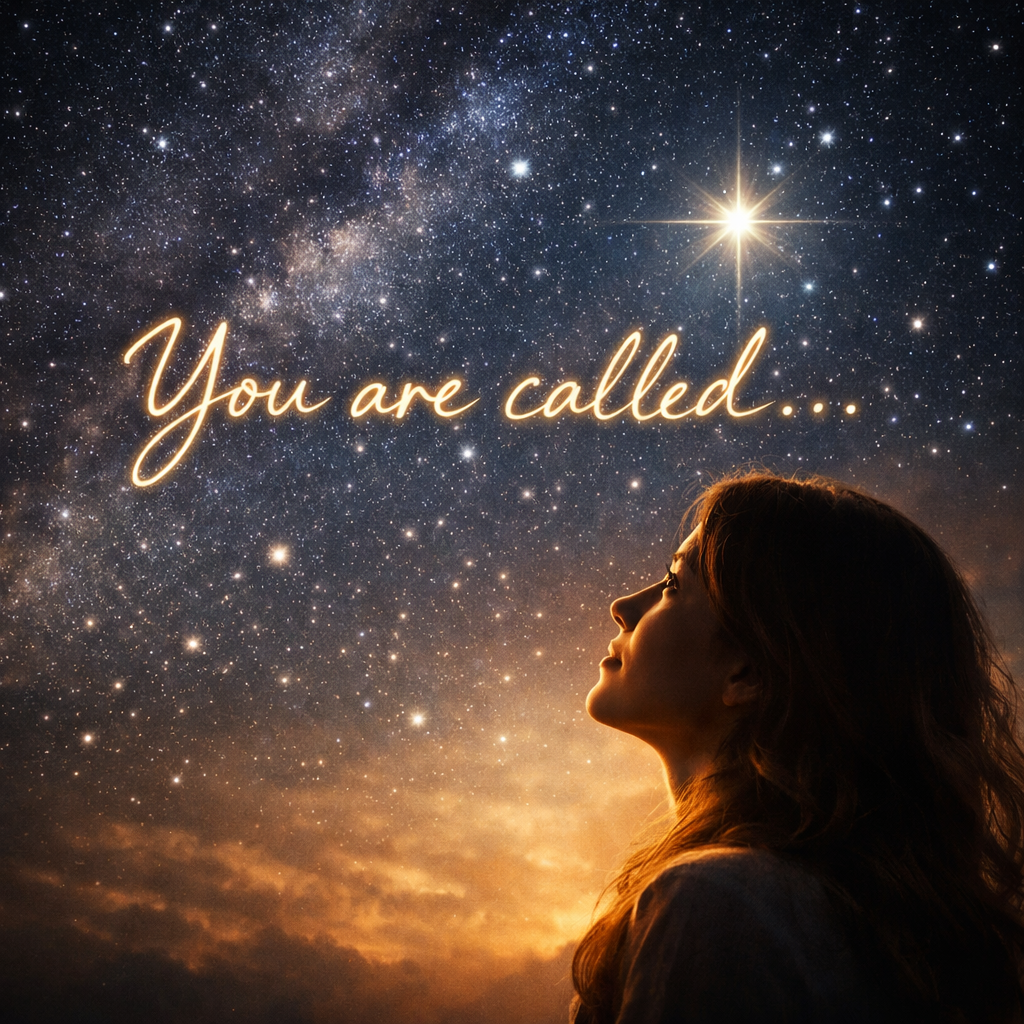
He sees who you are becoming. And He's already calling you by that name.
For deep diving on this devotional...
- Genesis 2:19-20 — Adam naming the animals
- Genesis 17 — Abram renamed Abraham and Sarai renamed Sarah
- Luke 1:5-25, 57-80— Zechariah and the naming of his son John
- John 1 — Jesus renaming Simon as Peter ("You shall be called Cephas" — which means Peter/Rock)
- Matthew 16:18 — The fuller context of Peter as the rock of the church (if you want to go deeper on that one)
- Judges 6-8 — The angel addressing Gideon: "The Lord is with you, O mighty man of valor"